
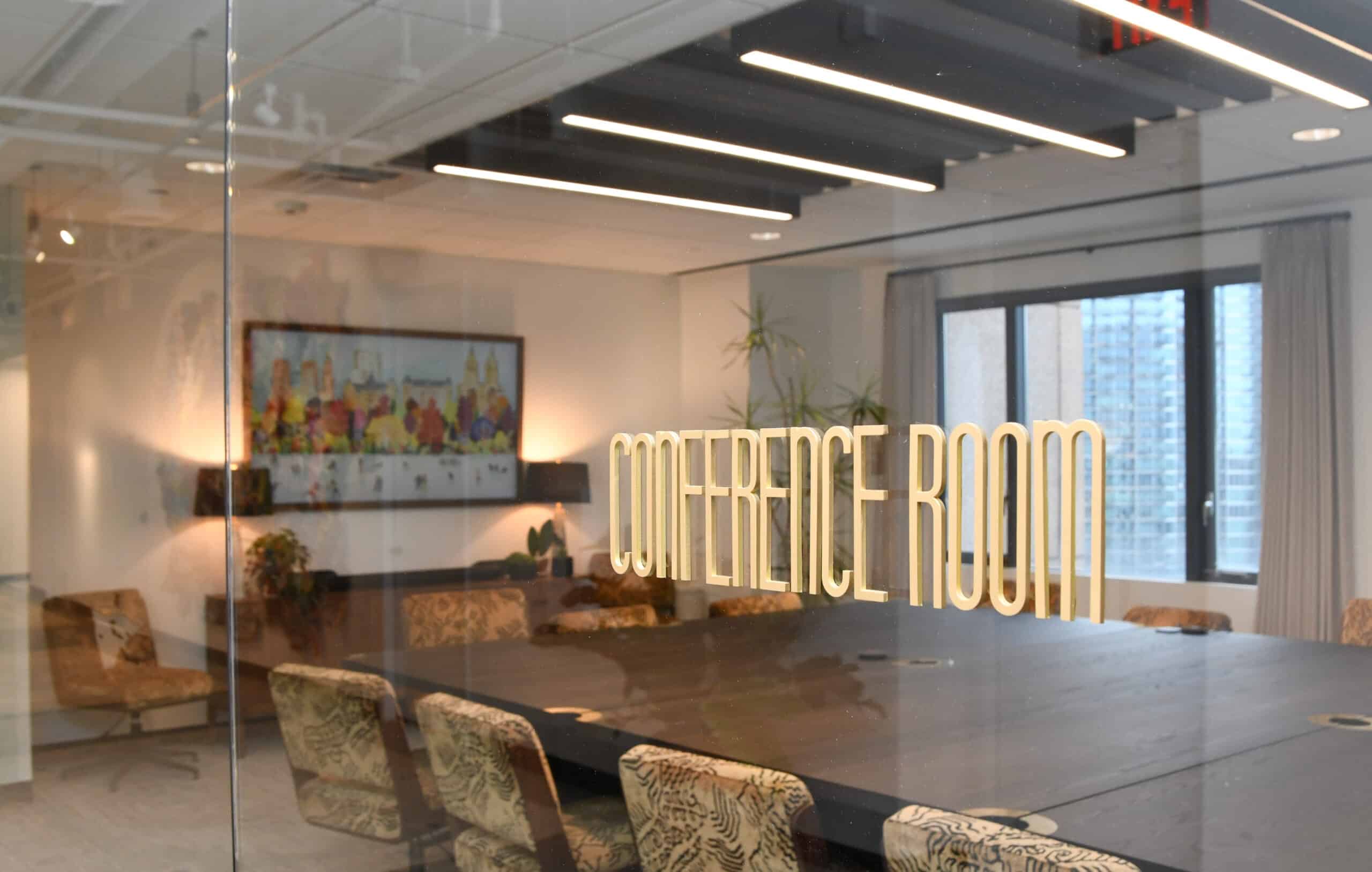
We have all been in a building that feels like a maze. You step off an elevator, look around for a sign, and end up guessing which hallway leads to the reception desk. When an office relies entirely on arrows and plaque signs to keep people from getting lost, it is usually a symptom of a confusing layout. Truly great uses subtle, subconscious cues to guide guests exactly where they need to go without them even realizing it.
Designing for Natural Navigation
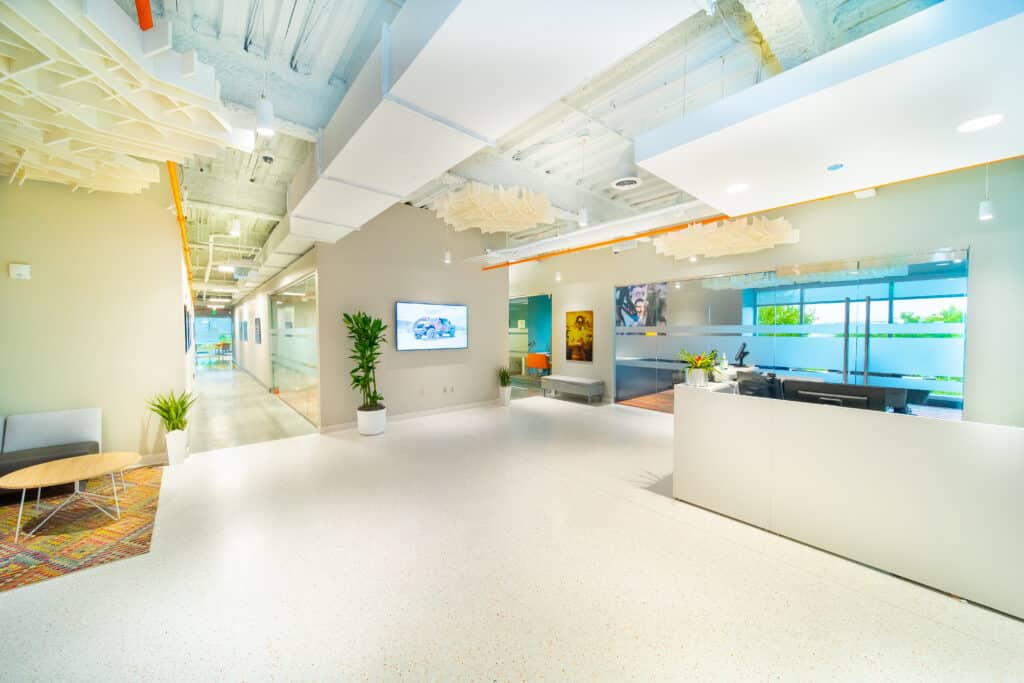
People naturally look for open sightlines and logical pathways when they enter a new environment. If a guest can see the main destination, like a reception area or a central lounge, the moment they walk through the door, the layout speaks for itself. Designing an office this way removes the anxiety of navigating an unfamiliar environment, creating a welcoming setup that requires little to no guesswork.
When major destinations are visible right from the entry point, foot traffic flows exactly where it needs to go. Visitors instinctively head toward open spaces and clear views, allowing an office to function smoothly without a chaotic clutter of directional signs hanging from the ceiling.
Mapping the Floor with Texture and Material Shifts
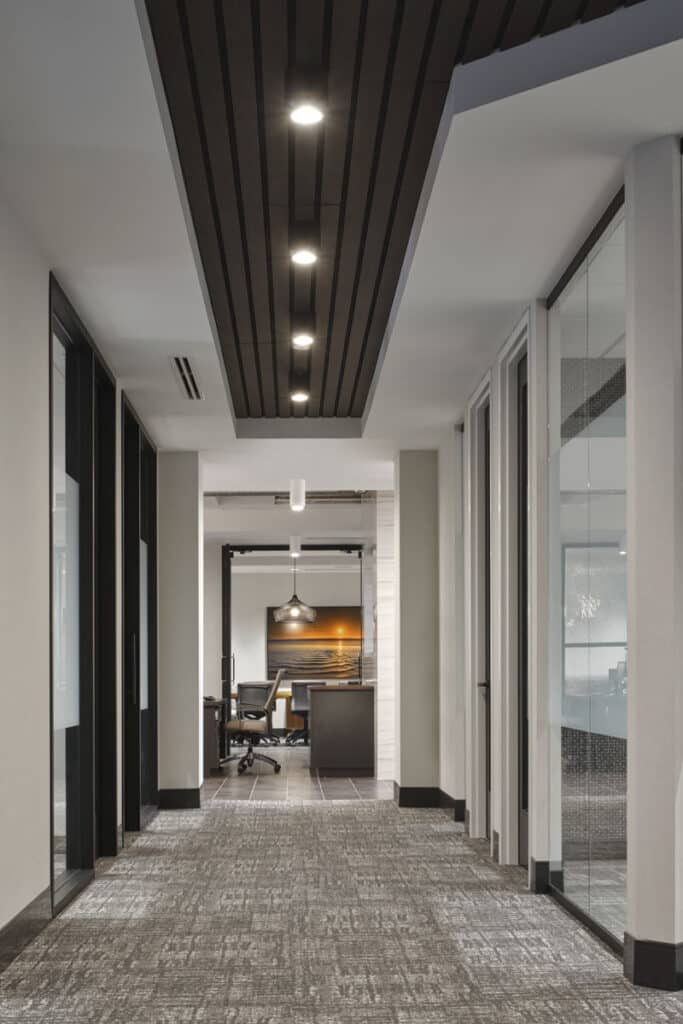
You don’t need a sign to tell people where a public hallway ends and a private workspace begins; the floor can do that work for you! Shifting materials is a highly effective way to create boundaries without building actual boundaries. For example, a visitor walking down a polished concrete or luxury vinyl tile corridor instinctively knows they are on a primary path. When that flooring transitions into a plush carpet, it generally signals a shift into a quieter, more focused zone.
By using contrasting textures or changing the direction of wood planks and carpet tiles, you can visually define paths for foot traffic to follow. This approach keeps open layouts organized, subtly guiding people along the intended route while keeping collaborative zones and quiet desks feeling distinct and separated.
Using Light to Point the Way
Human psychology plays a massive role in how we navigate buildings, and one of our strongest instincts is to move toward light. Dark hallways feel uninviting, while a brightly lit space naturally draws people forward. Designers can use this behavior to direct foot traffic simply by adjusting where and how fixtures are installed. Running a row of linear lights down a corridor or washing a main reception wall in bright, warm light naturally draws the eye, pointing people toward important destinations from a distance.
Lighting also helps people read the purpose of a space. Bright, crisp illumination tells the brain a space is active and meant for movement, like a primary walkway or a collaborative break area. On the flip side, shifting to softer, dimmed accent lighting indicates a transition into a quieter lounge or a private meeting nook, helping visitors adjust their pace and behavior on intuition alone.
The Bottom Line on Intuitive Design
Intentional layouts directly support daily business operations. When clients or new employees can’t easily find a meeting room or a restroom, it starts their visit on an awkward note. A clear, self-explanatory layout helps meetings start on time, prevents staff from constantly being interrupted for directions, and keeps the entire office running smoothly.
This seamless experience is a big part of the ROI of design, proving that intentional layouts directly support overall business performance. Every industry has unique operational workflows, making it critical to think about traffic flow early on when designing a business space suitable for your industry. When a workspace is easy to understand, it respects everyone’s time, projects confidence to visitors, and lets your team focus entirely on their work.
Creating Spaces that Speak for Themselves
At the end of the day, a workspace should make sense the moment you step inside. By using materials, light, and open paths instead of a wall full of arrows, you can create an office that feels completely intuitive. It’s a simple shift that clears out visual clutter and makes a massive difference in how people experience your space.
To learn how we can bring intuitive wayfinding into your office layout, contact Planning Interiors today to schedule a consultation.