
The days of waiting weeks for a single, static floor plan are officially over. The most successful workspaces are now being built with a new kind of collaborator: Artificial Intelligence. Leaning into these high-tech tools makes the design process faster, more precise, and—honestly—much more exciting for everyone involved.
AI isn’t here to take the heart and human element out of design. Instead, it handles the manual, time-consuming math so there’s more time to spend on the creative details that make an office feel right. Whether it’s a landlord trying to visualize a vacant suite or a tenant planning a total HQ overhaul, this technology is the secret to seeing a dream space come to life without the old-school delays.
Leveraging Automated Test Fits
In the past, seeing if a business could actually fit into a new footprint was a slow-motion game of trial and error. Automated test fits have completely flipped the script. By plugging in specific needs, like the number of desks, huddle rooms, and lounge areas, multiple layout options can be generated in minutes rather than days. This speed gives the freedom to explore “what if” scenarios in real-time. Different configurations can be compared instantly to find the absolute best use of square footage before ever committing to a final plan.
Solving Circulation Issues During the Planning Phase
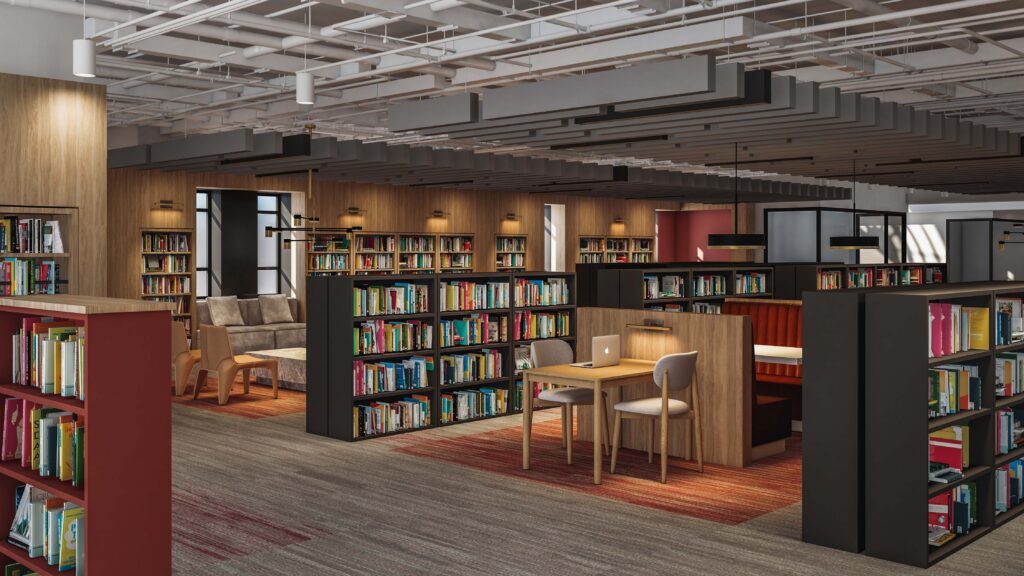
Predictive space utilization allows for a virtual simulation of how employees will actually navigate a floor plan. This identifies potential traffic jams or “dead zones” in the early stages, long before a single wall is built. Catching these bottlenecks early ensures the final layout feels intuitive and fluid for everyone using it. This preemptive approach is an incredibly effective way to avoid common design mistakes that can often delay commercial projects.
AI-Powered FF&E Filtering and Mood Boarding
Selecting Furniture, Fixtures, and Equipment (FF&E) often involves hours of manual research and catalog skimming. AI-powered filtering streamlines this by instantly narrowing down thousands of products based on specific budgets, lead times, or sustainability goals. If a project requires a specific ergonomic chair that can ship in under a month and fits a set price point, the technology identifies those options in seconds. This speed allows for the creation of mood boards that are grounded in actual availability, making the transition from a concept to a final purchase much more efficient.
Smart BIM Coordination and Clash Detection
Much of the heavy lifting in a project happens within the technical layers of the building. Using AI-enhanced Building Information Modeling (BIM) allows for advanced clash detection with incredible accuracy. These systems can identify if a new lighting fixture will interfere with HVAC ducting or a structural beam long before construction begins. Catching these technical conflicts in the digital phase prevents costly delays and field changes, keeping the project timeline on track and the budget intact.
Real-Time Visualization and Faster Decision Making
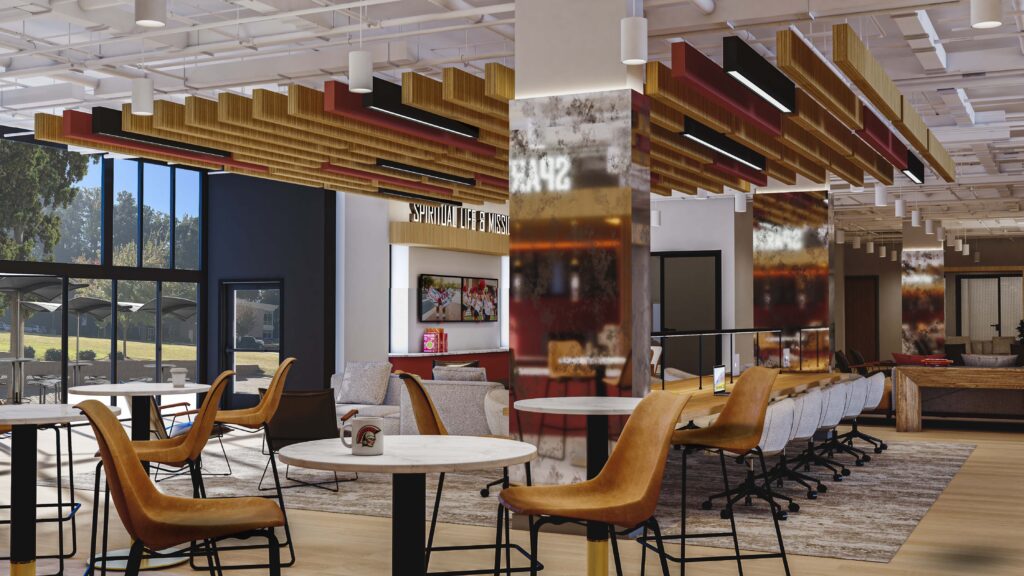
Visualizing a 2D drawing as a finished 3D environment can be a challenge. AI-driven visualization tools bridge this gap by rendering immersive environments that update instantly. If there is a question about how a different flooring material or a bolder wall color might change the energy of a lobby, those finishes can be swapped out in real-time. This immediate feedback loop creates a more collaborative experience, allowing decisions to be made with confidence and moving the project forward without the typical back-and-forth holdups.
The Human Touch Remains Irreplaceable
While these tools offer incredible speed and precision, they don’t replace the creative intuition that drives a successful project. AI can calculate the most efficient path for a hallway, but it doesn’t understand the specific vibe of a company’s culture or how a brand’s story should translate into textures and colors. Using AI as a tool rather than a disruptor simply means letting the technology handle the data so designers can focus on the creative aspects. The final result still relies on experienced designers to handle quality assurance, interpret brand nuances, and provide the thoughtful curation that makes a space actually work for people.
The most successful commercial designs lean into this balance of high-performance intelligence and creative insight. Utilizing these cutting-edge tools simply means delivering smarter, faster, and more inspired results. Contact Planning Interiors today to see how this modern approach can streamline your next office project!