
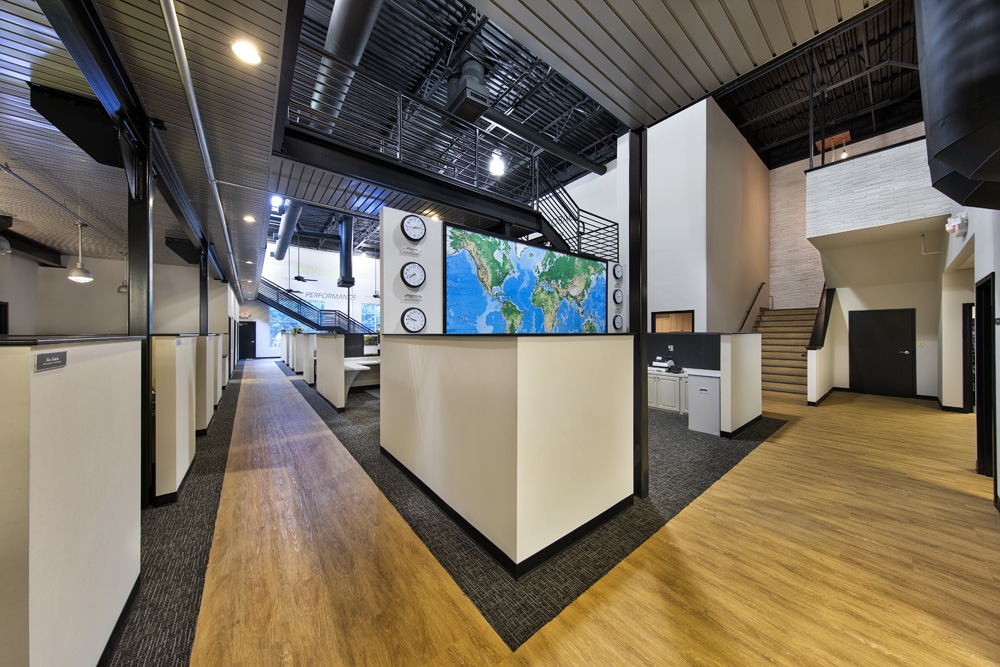
Technology has always been a key player in commercial interior design. Advancements in CAD (computer-aided design) software and 3D modeling have made the design process incredibly efficient , but now, we’re seeing the rise of a new force: Artificial Intelligence. AI has become increasingly integrated into our daily lives, and now we’re seeing it quickly emerge in the commercial design industry. It’s a powerful tool that’s changing how we approach everything from space planning to material selection. The question on everyone’s mind is this: will AI become a seamless partner in the design process or a disruptive force that replaces human creativity?

Space Planning
AI is making incredible strides in the early stages of design, especially when it comes to space planning. Designers can now effortlessly input client needs such as the number of offices, collaborative zones, meeting rooms, etc., then have AI generate multiple optimized layouts in seconds. That may have once seemed like science fiction, but now it’s a reality. AI-powered tools can analyze data, such as foot traffic patterns and natural light, to suggest layouts that maximize efficiency and flow. This kind of technology is doing wonders to help designers explore more possibilities faster, ensuring they find the best possible solution for a client’s unique needs.
Visualization
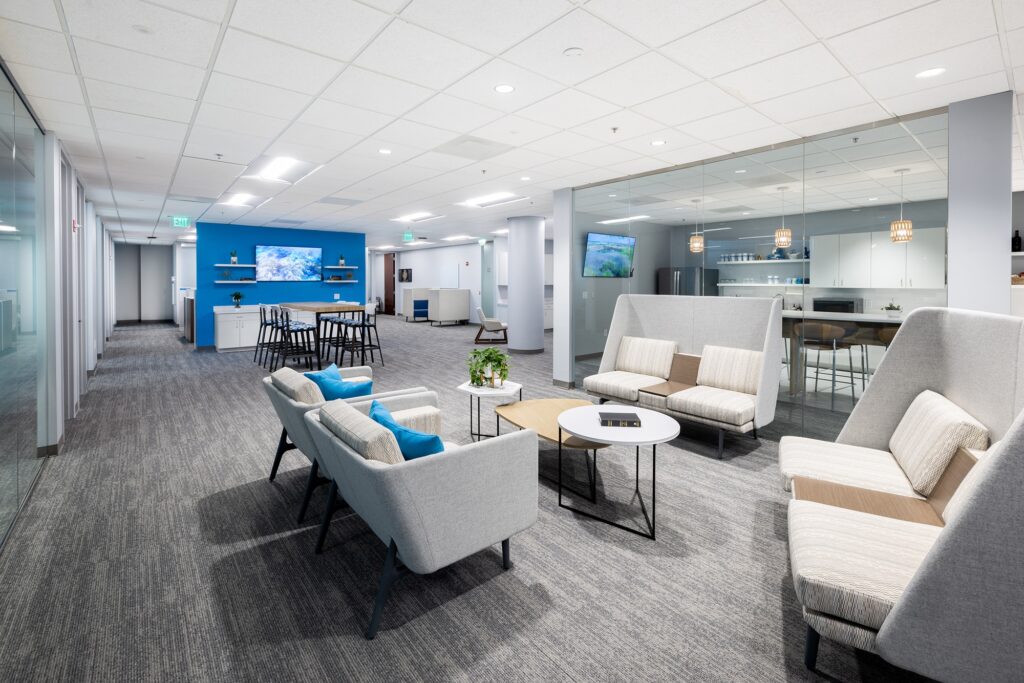
One of the most exciting applications of AI is in visualization. Gone are the days of waiting hours for a single high-quality render. Now, AI can generate photorealistic renderings from simple sketches or even text descriptions in a fraction of the time. This allows designers to get an idea of what the future space will look like with incredible detail and speed. In addition to generating static images, some AI tools can even create virtual walkthroughs or augmented reality experiences, helping clients truly feel and understand a space before it’s even built. This level of visual communication reduces misunderstandings and common design mistakes while helping everyone involved make more informed decisions.
Forecasting Behavior
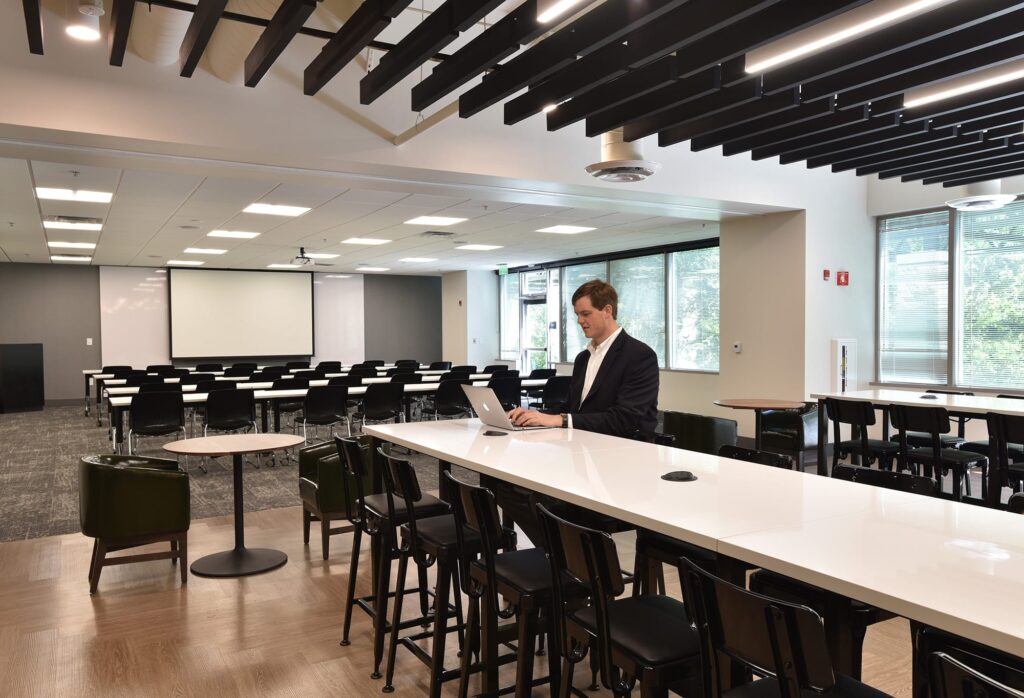
Beyond just creating beautiful visuals, AI is proving to be a powerful tool for understanding human interaction with various spaces and layouts. By crunching data on everything from foot traffic to usage patterns in similar environments, AI can predict how people will move through and use a new design. This helps designers anticipate potential issues, like congested hallways or underutilized common areas, before a single wall is built. With these insights, designers can build spaces that are functional, intuitive, and visually appealing, creating a final result that truly serves its occupants.
Where the Human Touch Remains Irreplaceable
As AI technology continues to grow, so do concerns about i’s potential to supersede human work. But if we view AI as a tool that can empower designers, rather than outright replace them, the applications are limitless. By automating the more tedious, repetitive tasks, AI frees up time for designers to focus on what they do best: create meaningful, innovative, and human-centric spaces. It’s a partnership where AI handles the data and logistics, and designers handle the creativity and connection. As this technology advances and becomes further integrated, it can be used to elevate work and push the boundaries of what’s possible in commercial design.
Ready to create a space that’s both smart and human-centered? Contact us today to learn how we can help.