
Designing a corporate legal office requires a delicate balance between high-end aesthetics and rigorous technical standards. Unlike a standard creative suite or an open-plan tech hub, a law firm operates on the currency of discretion and deep focus. Every square foot must be optimized to protect client privilege while providing attorneys with the quiet environment necessary for intense research and document review. From the materials selected for the lobby to the decibel-dampening construction of the walls, the interior architecture of a corporate legal office serves as a silent partner in the firm’s daily operations.
Creating a Professional First Impression
A law firm’s entry point immediately communicates its values and level of professionalism. Selecting sophisticated but warm materials, such as rift-cut oak, architectural stone, or high-end performance textiles, establishes an atmosphere of stability and trust. This aesthetic choice balances the high-pressure nature of legal work with a sense of calm, which is of great importance for clients entering the office under stressful circumstances.
Thoughtful lighting and intuitive furniture placement provide a clear sense of direction while offering a comfortable, private place to wait. This kind of intentional design helps the transition from a public hallway to a private consultation room feel absolutely seamless. These details demonstrate the ROI of design by reinforcing a firm’s success and building immediate confidence with every visitor.
Strategic Zoning and Controlled Circulation
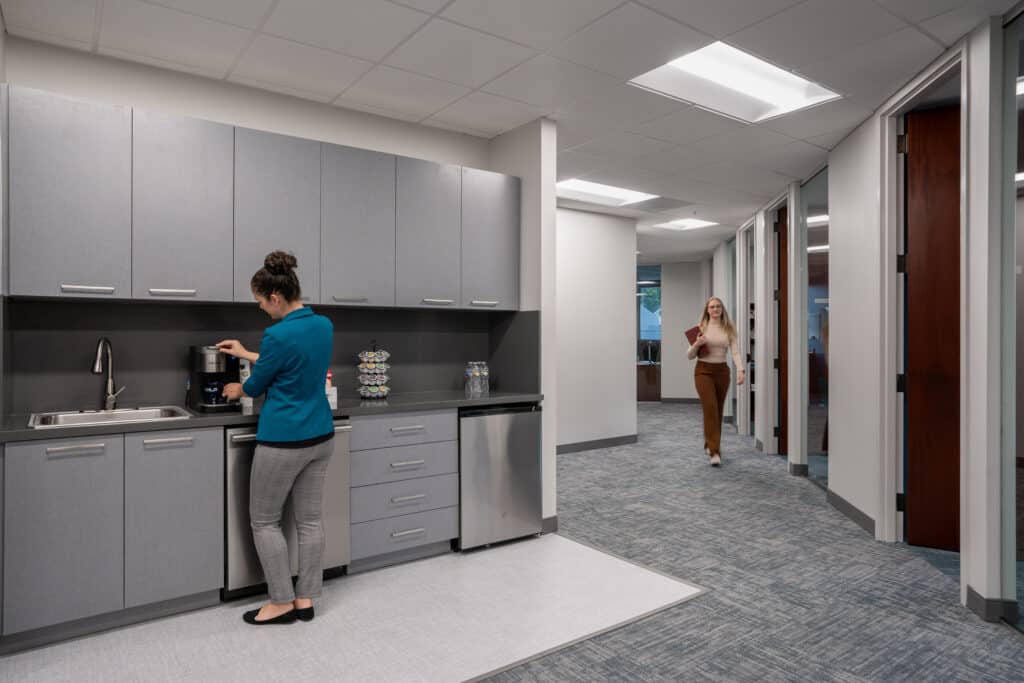
Protecting confidentiality begins with the floor plan.
In a legal environment, the layout must clearly define boundaries between public-facing meeting zones and the private workspaces where sensitive communication is handled. This separation prevents clients or visitors from accidentally seeing active files or encountering opposing counsel during high-stakes proceedings.
Implementing a “front of house” and “back of house” strategy ensures that the flow of traffic is both intuitive and secure. Client-facing zones, such as conference rooms and consultation spaces, are positioned near the entry to minimize foot traffic through the main office. Meanwhile, the staff-only areas are tucked behind secure access points, allowing attorneys to collaborate and review evidence without the risk of a breach in privacy. Controlled circulation paths are a key feature of modern spec suites that actually sell, as firms increasingly prioritize layouts that offer built-in security and operational efficiency.
Acoustic Privacy and Technical Integration
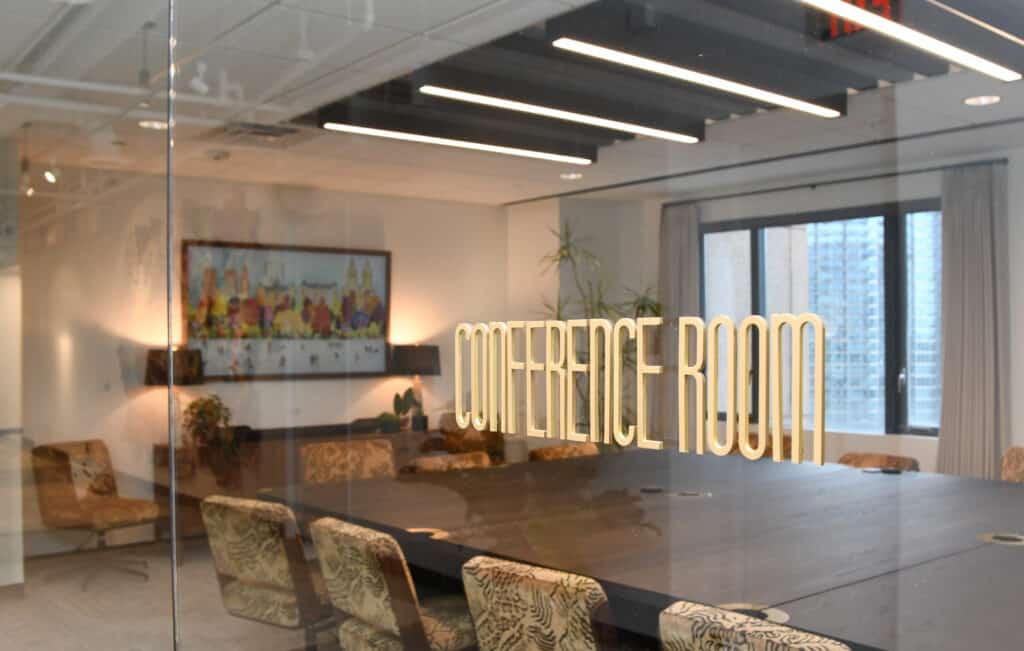
In a legal office, a wall is only as effective as its STC (Sound Transmission Class) rating. To maintain strict confidentiality, partitions between private offices and conference rooms must be engineered to prevent sound bleed. This involves extending slab-to-slab walls, using double-layered drywall with damping compounds, and installing specialized automatic door bottoms that seal the gap between the door and the floor when closed.
To further protect sensitive conversations, sound masking systems—often referred to as “white noise”—are integrated into the ceiling grid to raise the ambient noise floor, making overhead speech unintelligible in adjacent spaces.
The technical requirements extend into the digital realm as well. Modern depositions and virtual hearings demand a specific infrastructure:
- Integrated AV Technology: Strategically placed microphones and high-definition cameras ensure clear audio and video for court reporters and remote judges without cluttering the desk surface.
- Dimmable, Directional Lighting: Specialized fixtures eliminate shadows during video calls and provide the flattering, professional appearance required for remote testimony and legal proceedings.
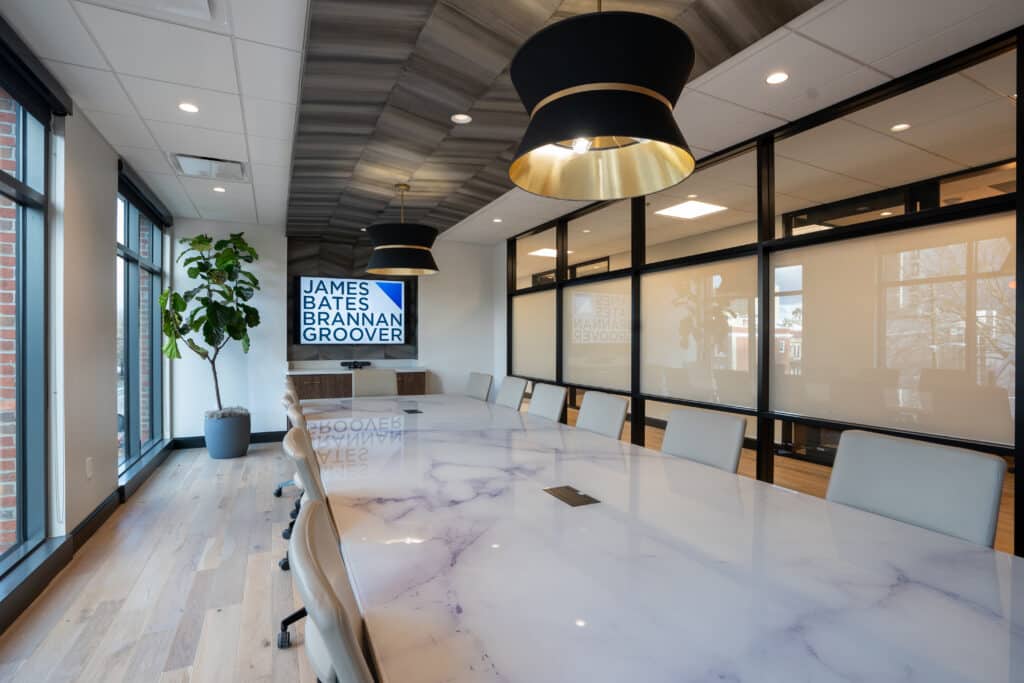
- Acoustic Wall Panels: Fabric-wrapped or wood-slatted treatments reduce echo and improve audio clarity; a necessity for capturing every word of a deposition or hearing record.
Optimized Workspaces for Attorney Workflows
While many modern office designs have shifted toward open-plan environments, the legal profession still requires a higher ratio of private offices. Private offices serve a practical purpose beyond firm hierarchy. These rooms fulfill the functional requirements for intensive, heads-down research and provide the acoustic isolation necessary for protected phone calls. A well-designed attorney’s office accounts for heavy document use, providing ample secondary surfaces and integrated shelving that keeps active files organized without cluttering the primary workspace.
However, the “private office” is also evolving to include more collaborative capabilities. By incorporating small, “huddle” style seating areas within an office, attorneys can host quick internal strategy sessions without needing to book a formal conference room. This flexibility supports the high-velocity nature of litigation and corporate law, where team members often need to pivot between solo drafting and group review several times a day.
Balancing Technical Precision with Human Curation
The most successful corporate legal offices avoid feeling like a series of fortified bunkers. While the technical requirements for acoustics and circulation are non-negotiable, the human element, how an attorney or client feels in the space, defines a firm’s culture. Prioritizing natural light in common areas and selecting ergonomic furniture that supports long hours of litigation prep allows a firm to maintain high-stakes operational standards without sacrificing the well-being of its staff.
A well-planned layout acts as a foundational tool for operational efficiency. When a layout seamlessly supports both the rigorous demands of confidentiality and the practical needs of daily workflows, it allows the firm to focus entirely on the practice of law. Building upon a foundation of technical precision maintains the office as a secure, high-performing environment for years to come!
If you are ready to optimize your firm’s layout for maximum confidentiality and focus, contact Planning Interiors today to begin your consultation.